
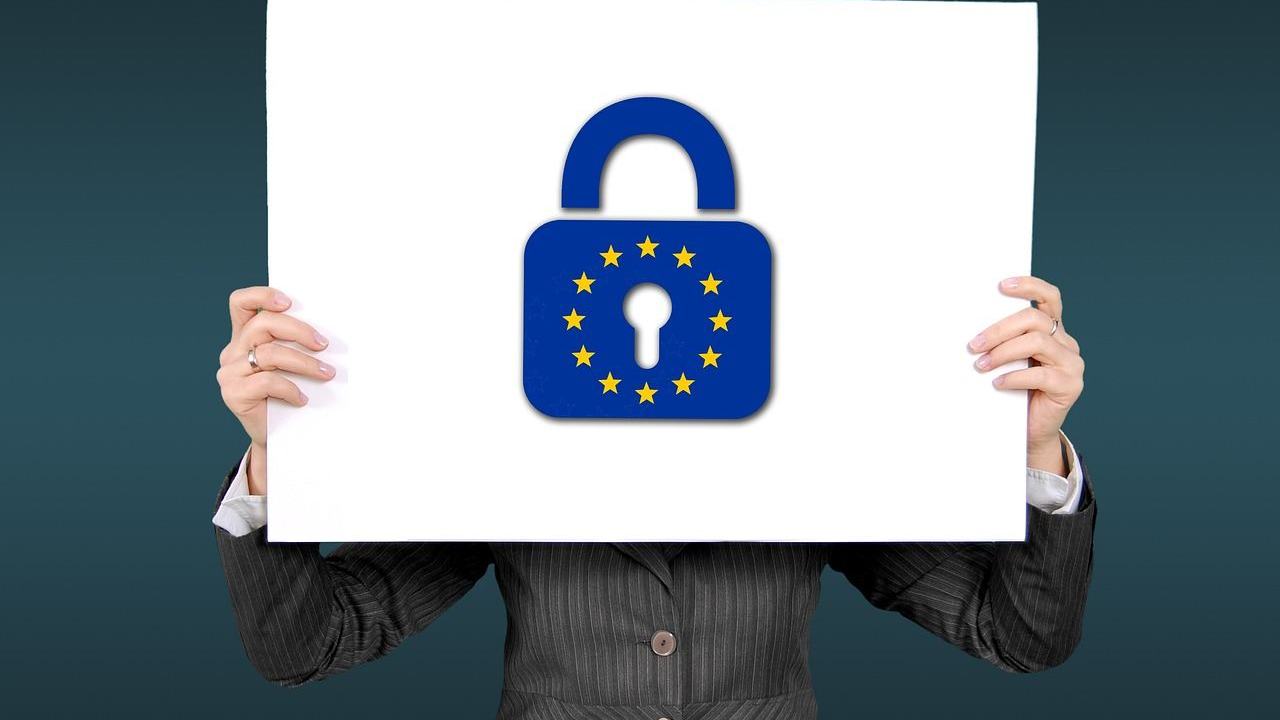
Not sure which EU rules your connected product has to meet? IoT regulations compliance in Europe now means meeting the Radio Equipment Directive’s cybersecurity rules, then preparing for the Cyber Resilience Act.
This guide sits inside our wider look at iot business strategy, where compliance is one of several commercial decisions.
| Item | Value |
|---|---|
| RED cybersecurity requirements apply to relevant radio equipment | since 1 August 2025 |
| Delegated Regulation (EU) 2022/30 repealed | with effect from 11 December 2027 |
| Cyber Resilience Act entered into force | December 10, 2024 |
| Cyber Resilience Act fully applicable | 11 December 2027 |
| ETSI EN 303 645 consumer IoT baseline | 13 essential IoT security best practices |
The figures come from Kiwa’s regulation update and QIMA’s consumer IoT guide. Dates and deadlines can change, so check the source before you rely on them.
What does IoT compliance cover in the EU?
For connected products sold in Europe, two laws do most of the work: the Radio Equipment Directive (RED) and the Cyber Resilience Act (CRA). The RED is the older of the two, and UL Solutions describes Directive 2014/53/EU as a framework with essential requirements for safety and health, electromagnetic compatibility and radio spectrum efficiency.
Cybersecurity was added to that framework through a delegated act, and the CRA then widens the net to products with digital elements. Think of the first as the rule you must meet today and the second as the one you plan for.
The cost of getting it wrong is commercial rather than abstract. QIMA states that non-compliance blocks market access and results in severe financial penalties.
What the RED cybersecurity rules require
In January 2022 the Official Journal of the European Union published Delegated Regulation 2022/30/EU, which enforces compliance with RED Article 3.3(d), (e) and (f), as UL Solutions explains. Each article targets a different risk:
- Network protection: devices must avoid harming communication networks and must not disrupt websites or services.
- Personal data and privacy: devices need measures that prevent unauthorized access to, or transmission of, consumers’ personal data.
- Fraud reduction: devices need features such as better user authentication to limit fraudulent payments and transfers.
The scope is wide: UL says the regulation covers internet-connected devices that communicate directly or via other equipment. Its examples include mobile phones, tablets, laptops, baby monitors, wireless toys, smartwatches and fitness trackers.
On timing, Kiwa’s 2026 update says the requirements have applied to relevant radio equipment since 1 August 2025. Manufacturers must keep complying with them until the delegated regulation is repealed.
Where does GDPR fit in?
The privacy article is where data protection law touches product design. UL Solutions says Article 3.3(e) applies to equipment that processes personal data, traffic data or location data, and it points to the definitions in EU regulation 2016/679, which is the GDPR.
The payment article is narrower. Article 3.3(f) applies to radio equipment that lets the holder or user transfer money, monetary value or virtual currency, according to UL.
A sensible reading is that these articles are design requirements for the device itself. Your wider data-protection duties as a company, such as how you handle customer data in the cloud, go beyond what the sources here cover, so take advice on them separately.
The Cyber Resilience Act and what comes after RED
QIMA reports that the CRA entered into force on December 10, 2024, and that it has rewritten the rules for any product with digital elements. Manufacturers are expected to build secure-by-design principles into the whole product lifecycle.
The two laws overlap for a while. Kiwa notes that Delegated Regulation (EU) 2022/30 is set to be repealed with effect from 11 December 2027, when the CRA becomes fully applicable.
In practice, the RED rules are the bridge. Products you design now should satisfy the radio equipment rules today without needing a redesign when the CRA takes over.

Standards that make compliance easier
Law tells you what outcome to reach, while a standard tells you how to show it. QIMA says ETSI EN 303 645 is built upon 13 essential IoT security best practices, and it highlights three:
- No universal default passwords: devices must require unique credentials per unit or force the user to set a secure password on initialization.
- Vulnerability management: manufacturers publish a Coordinated Vulnerability Disclosure policy with a public contact for security researchers.
- Secure software updates: devices receive timely, secure patches, and the guaranteed support period is communicated to the consumer.
When the RED regulation was new, UL said the harmonized standards would likely be based on EN 303 645 and IEC 62443-4-2. QIMA likewise calls EN 303 645 the optimal blueprint while the CRA’s own harmonized standards are being finalized.
A practical compliance path for manufacturers
Treating security as a last-minute test is the costly route. QIMA’s guidance instead describes a structured sequence, which you can adapt to your own product:
- Plan and document: list the device models, firmware versions and network interfaces under assessment.
- Run a gap analysis: compare your current architecture with the core provisions before formal testing starts.
- Find vulnerable components: check for weak code, enforce cryptographic checks and create a Software Bill of Materials (SBOM).
Each step raises a sourcing question. If you are weighing in-house engineering against bought-in modules, the trade-offs in our guide to iot build vs buy apply to security work too.
Test labs, certification bodies and module suppliers are part of your wider network, which our piece on iot ecosystem partnerships explores. Choose them early, because evidence gathered late is expensive to fix.
Frequently asked questions
Does the CRA replace the RED rules straight away?
Show answer
No. The RED duties stay yours until the delegated regulation is repealed, a step that Kiwa ties to the CRA becoming fully applicable.
Do I have to certify to EN 303 645?
Show answer
The sources present it as a baseline and blueprint rather than a legal must. UL suggested that testing against it, or obtaining third-party certification aligned with it, is something you may consider.
Why do some pages give a different deadline?
Show answer
Older guidance can lag behind. UL’s page gives Aug. 1, 2024 as the mandatory date, while Kiwa’s later update says the requirements have applied since 1 August 2025. Confirm against the official text with a lab or legal adviser.
Is this guide legal advice?
Show answer
No. This is an independent educational site, and it does not certify products or offer compliance services. Use it to frame your questions, then check them with a notified body, test lab or lawyer.