
Are you stuck deciding between an IoT proof of concept vs pilot? A proof of concept shows the idea can work on a bench. A pilot shows it can work in the field, at scale, with a business case.
For the bigger picture, read the wider guide to iot business strategy, which places this decision in context.
| Item | Value |
|---|---|
| Proof of concept length | often a couple of weeks |
| Field pilot length | weeks, not days |
| Full rollout of a real-size deployment | months |
| Pilot time cap for basic functionality testing | no more than three-to-four months |
| Pilot scope cap | no more than five scenarios |
| IoT projects stalled at the proof of concept stage (Cisco survey) | over 60% |
These figures come from TagoIO’s guide to real deployments and an IoT Now article that reported the Cisco survey in October 2018. Vendor timings and survey results can change, so check the source before you rely on them.
What a proof of concept should prove
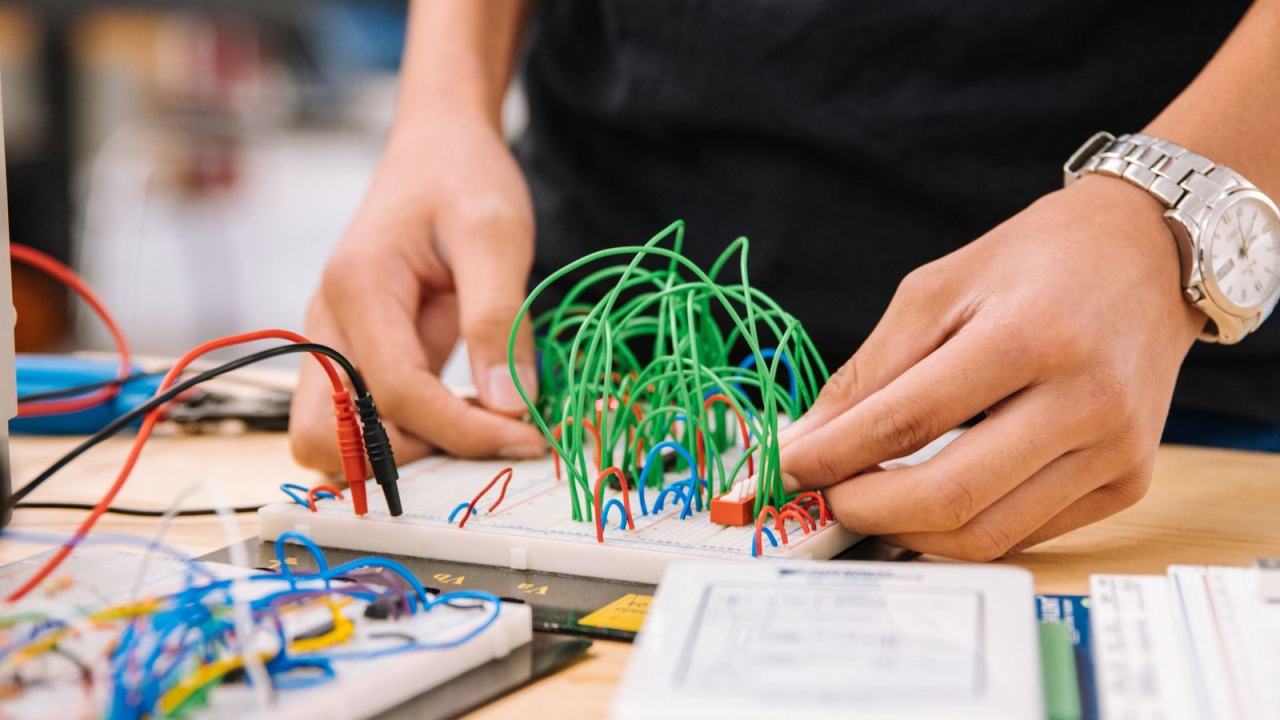
A proof of concept is the first step: it tests whether an idea is viable before you spend more time and money on it, according to TagoIO. In practice that means one device, or a handful, on a desk or a bench, as TagoIO’s deployment guide describes it.
The job is narrow: prove the data path works. The device reports, the payload parses, and a dashboard shows something real.
A good proof of concept answers technical and planning questions:
- Is the idea feasible with the hardware and connectivity you picked?
- How hard will it be to develop and implement?
- What timeline, people and budget would the next stage need?
Scope creep and vague objectives are the main reasons IoT proofs of concept fail, TagoIO’s pilot guide argues. Its fix is to define measurable goals before the work starts. The deployment guide adds that a proof of concept which drags on usually has unclear goals rather than hard engineering, per the same vendor.
What a pilot should prove
A pilot takes the devices off the bench. They go on the actual asset, in the actual location, with the actual connectivity, according to TagoIO.
That is where you learn what a bench cannot show: the signal drops behind a metal door, the battery drains faster in the cold, or the payload format changes when the firmware updates. These are field failures, and no amount of desk testing exposes them.
The second job of a pilot is commercial. TagoIO’s pilot guide says the combination of technical feasibility from a proof of concept and business feasibility from a pilot is what determines whether an IoT project succeeds. Testing that business side is far easier when you have written down a clear iot value proposition for the pilot to confirm or reject.

By the end of a pilot you should be able to show:
- The devices survive real field conditions.
- The data changes a decision or triggers an action someone actually takes.
- The cost of scaling is known and the budget behind it is real.
- Somebody owns the system once the project team steps back.
How long should each stage take?
TagoIO’s deployment guide puts a proof of concept at often a couple of weeks. A field pilot runs in weeks, not days, because you need enough time to see failures that only happen occasionally. Full rollout of a deployment of real size takes months, because provisioning, installation and verification happen at human speed across many locations; all three timings come from that guide.
A wider cap appears in an IoT Now piece by a Wipro executive: a pilot should take no more than three-to-four months for basic functionality testing, with no more than five scenarios tied to business goals. Both sources are written by vendors or service firms, so treat these timings as rules of thumb, not standards. This guide is independent and not affiliated with any company named here.
Turning those rules of thumb into dates is easier with an iot project roadmap that gives each stage an owner and an exit test.
Why projects stall between the stages
Reported failure rates differ by source and year, so read them as a pattern. TagoIO says more than 30% of IoT projects fail while still at the proof of concept stage, in its pilot guide. A Cisco survey reported by IoT Now in October 2018 found over 60% stalled at that stage, and LORIOT cites industry research that around 90% never reach full deployment.
The IoT Now article names several causes of stalled pilots:
- Companies build the solution first and then search for a problem to fit it.
- New systems have to be integrated with old ones that were never designed to share data.
- Solutions overloaded with functionality push up cost and deployment time.
- Transformation teams launch pilots with limited buy-in from the operations teams who must adopt them.
TagoIO calls the quietest version pilot purgatory: the pilot proved the technology, but no one built the business case for scaling, no one was assigned to drive the rollout, or the production budget was never real (deployment guide).
LORIOT warns that early prototypes are often treated as fully scalable solutions, and that scalability must be built in from the start. Its practical test is to ask what happens at 100 devices in the field and who maintains them, as its scaling lessons explain.
How do you know when to move on?
Use exit tests rather than the calendar. Write them before each stage begins, so the decision is not made by whoever is most enthusiastic in the meeting.
- Leave the proof of concept when the data path works and every question you set at the start has a written answer.
- Leave the pilot when field problems are fixed, the business case holds at a larger size, and the cost of the next step is agreed.
- Do not call the pilot finished until a named person is responsible for running the system afterwards.
That last test matters because, in TagoIO’s words, the real problem in many failed deployments is that the deployment had a builder but no owner (source).
TagoIO also argues that many teams are too focused on running proofs of concept when they already have enough information to put most of their time into pilots, in its pilot guide. If your data path is already proven, a second bench test rarely earns its cost.
Frequently asked questions
Can you skip the proof of concept?
Show answer
Sometimes. The same TagoIO guide says a proof of concept may still be necessary in some situations, but the pilot is the phase that demands more attention from the team and management, as it explains. Skip it only when the technology is well understood and the open questions are about the field and the business.
Is a pilot the same as an MVP?
Show answer
They are close but not identical. A pilot is smaller in scale and uses fewer resources, and it also assesses feasibility before full production, while an MVP leans on customer feedback to judge success, per TagoIO.
What comes after the pilot?
Show answer
TagoIO describes limited production next: a subset of the fleet running the way production will run, small enough to fix without a crisis. Its purpose is to test operations rather than technology, as the deployment guide sets out.
What should a handoff to operations include?
Show answer
The same deployment guide lists documented alert meanings and response steps, an at-a-glance view of device health, a process for replacing dead hardware, and one clear owner measured on whether the system runs. See TagoIO for the full description.